




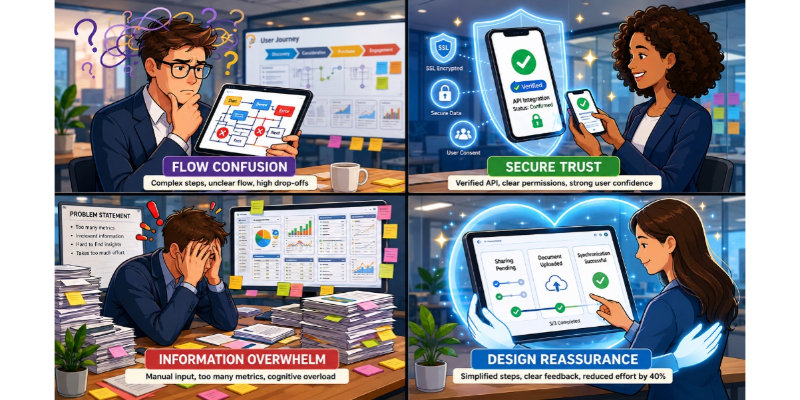
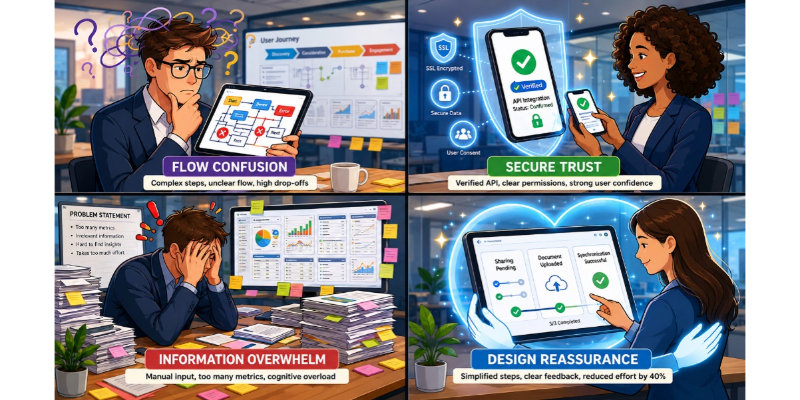
In today's fast-moving digital world, organizations are under constant pressure to innovate, launch products quickly, and deliver new features at an increasingly rapid pace. While speed and execution are important, many products still fail because teams begin with solutions instead of first understanding the real customer problem. Rather than asking, "What problem are we solving?" many organizations immediately jump to "What should we build?" This seemingly small shift in focus often leads to significant consequences. Teams spend months developing features, redesigning interfaces, or introducing new technologies only to discover that customer adoption remains low and business outcomes fail to improve. The most successful product teams understand that solving the right problem matters more than building solutions quickly. They invest time in understanding customer pain points, emotional friction, user behavior, and business impact before moving into execution. Organizations that deeply understand customer problems create stronger products and better user experiences. Instead of rushing into feature development, successful teams focus on understanding customer pain, emotional friction, and real user challenges. This approach helps companies build products customers truly value, strengthen trust and loyalty, improve engagement and retention, reduce product failure, and create smarter long-term strategies. One of the biggest challenges organizations face is the natural tendency to rush toward solutions. Modern companies often reward visible activity such as feature launches, prototypes, and roadmap updates more than research and problem discovery. Because of this pressure, teams frequently move into execution before fully understanding customer needs. Many organizations mistake speed for progress. However, moving quickly without clarity often leads to costly mistakes and products that solve the wrong problem. Companies may continue adding functionality believing customers want more features, while users are actually struggling with confusion, complexity, or lack of trust. The hidden cost of solving the wrong problem extends far beyond financial loss. It can damage customer trust, reduce product credibility, weaken stakeholder confidence, lower team morale, and slow long-term business growth. Even products that are beautifully designed and technically advanced can fail if they do not address meaningful customer needs. This is where the concept of "selling the problem" becomes essential. Selling the problem means clearly explaining why an issue matters before discussing possible solutions. Strong product teams ensure stakeholders fully understand customer pain, business impact, and urgency before moving into execution. A strong problem narrative answers five critical questions: What is happening? Who is affected? Why is it happening? Why does it matter? What happens if nothing changes? When these questions are answered clearly, conversations become more strategic and focused on outcomes rather than opinions. Successful product strategies begin with understanding customer pain points instead of reacting to feature requests. Customers often communicate their frustrations through comments such as "I got stuck," "I couldn't find what I needed," or "This process feels confusing." These statements reveal deeper emotional friction including confusion, hesitation, uncertainty, and frustration. Real customer pain often hides within behavioral patterns rather than direct complaints. Common signals include onboarding drop-offs, abandoned workflows, repeated clicks, slow task completion, payment hesitation, and recurring support complaints. Understanding these behaviors helps organizations identify meaningful opportunities for improvement. To uncover meaningful user pain, strong product organizations combine multiple research methods. User interviews reveal frustration, confusion, and emotional barriers behind customer actions. Behavioral analytics help identify friction points through drop-off patterns and abandoned tasks. Customer support teams provide valuable insight into recurring complaints, while sales conversations reveal unmet needs, objections, and trust concerns before adoption even occurs. Once customer pain points are identified, organizations must translate them into clear problem statements. Strong problem statements explain who is affected, what challenge exists, why it happens, and what impact it creates. Clear problem framing improves prioritization, stakeholder alignment, and strategic decision-making by helping teams focus on real customer challenges instead of assumptions. Customer empathy plays a critical role in this process. Empathy is not simply understanding what users do—it is understanding how they feel while interacting with a product. Users may abandon onboarding because the experience feels overwhelming, or hesitate during checkout because they do not trust the payment process. When teams understand emotions such as trust, frustration, hesitation, and uncertainty, they create products that build confidence rather than simply improving efficiency. Customer journey mapping further strengthens problem discovery. Problems rarely exist within a single screen or interaction. Most frustrations develop across multiple touchpoints throughout the customer experience. Journey mapping helps teams identify where confidence drops, effort increases, frustration grows, and abandonment occurs. Without journey-focused thinking, organizations improve isolated screens. With journey-focused thinking, they improve entire experiences. Once teams understand a customer problem, they must explore solutions without becoming attached to a specific idea too early. This is where the "How Might We" approach becomes valuable. Instead of immediately proposing features, teams ask open-ended questions that encourage broader thinking and innovation.

© 2022 ScoreCity. All Rights Reserved.
.png)
.jpeg)
.jpeg)
.png)
